Hello viewer,
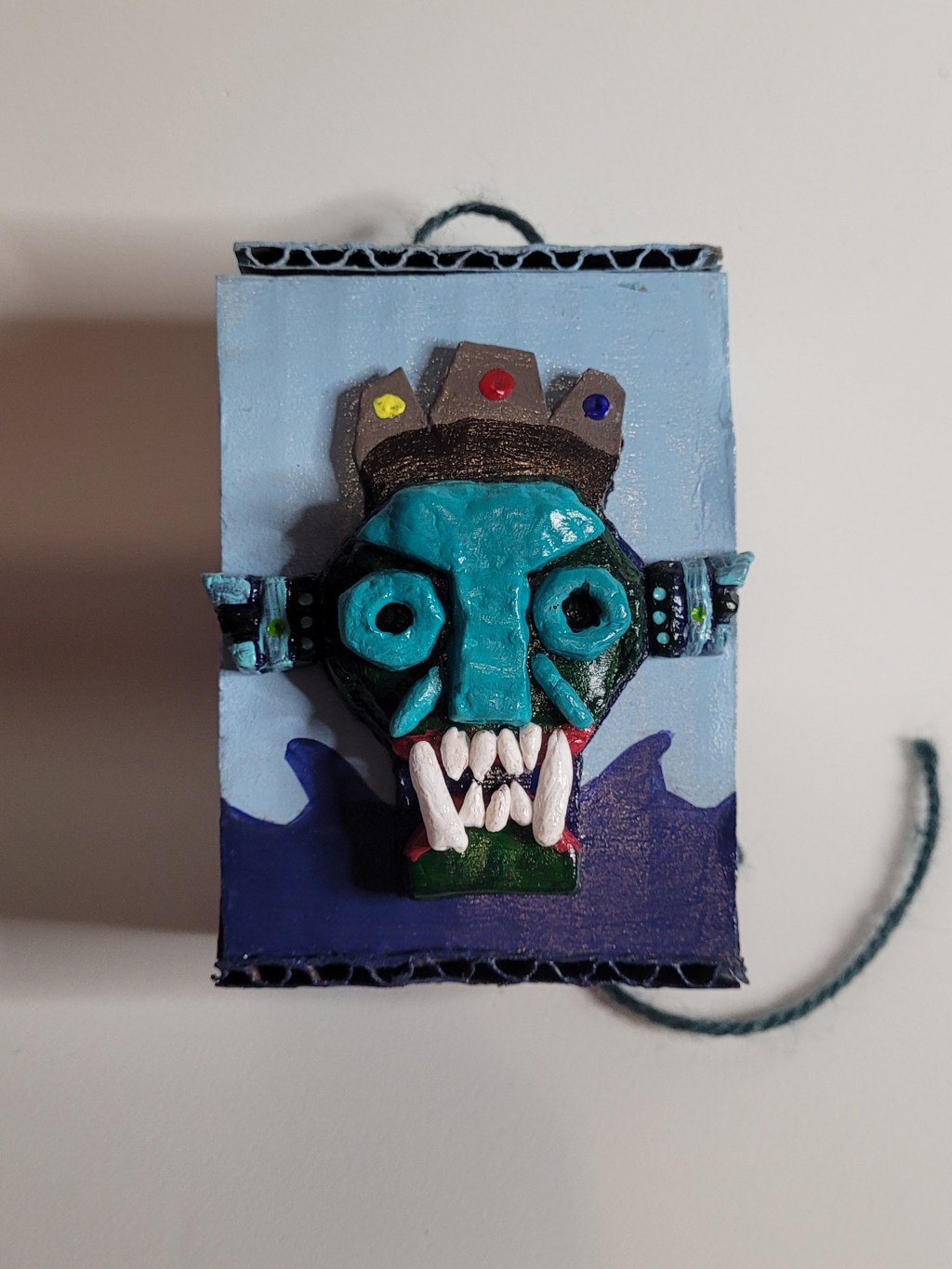
At the end of the Fall 2025 quarter at my university, I was incredibly tired and eager to get some rest and make some art of my own accord, instead of just for assignments. However, as you would know if you’d read the last blog post I made, a flood hit my neighborhood, and a dozen others, the day after my final day of class. This did somewhat interrupt my plans for rest and relaxation, but over the break I still did manage to make some art, one piece in particular I’m very proud of is the Tlaloc Idol Box I made.
For a while now, I’ve wanted to incorporate more Mesoamerican aesthetics into my art. I mean, I spend so much time researching them and I admire them so much, I just feel obligated to pursue them in my work. The 2 main things I feel define Mesoamerican art, broadly, are flattened and often geometric forms and a maximalist approach to composition. The reason that Mesoamerica developed such a unique artistic style is because Mesoamerican peoples, unlike pretty much every other culture ever, developed weaving before they developed pottery.
If you’d like to learn more about Mesoamerican art, I’ve been making my way through the book The Art of Mesoamerica, sixth edition, by Mary Ellen Miller, and I’ve found it very insightful. That said, acknowledging the fact that I am not an expert on this topic, one criticism I do have of the book is that it does not acknowledge when pieces of information it provides are debated or contentious. For example, on page 153 at the start of the chapter on late classic period Maya cities, Miller presents the simple narrative that the “collapse” of the Maya cities was caused merely by overpopulation, “This [Maya] occupation was not sustainable, and Maya population outstripped resources of wood and cropland. Competition for increasingly scarce resources led to attempted, but failed, centralization, warfare, conflagration, enslavement – and ultimately the abandonment of great cities.” From what I understand, the cause or causes of the Maya “collapse” are widely debated, and the historian community has yet to reach a conclusion. I believe that narratives like this in the book are oversimplifications and may give readers an inaccurate idea of the state of discourse around Mesoamerican history.
The Art of Mesoamerica by Mary Ellen Miller
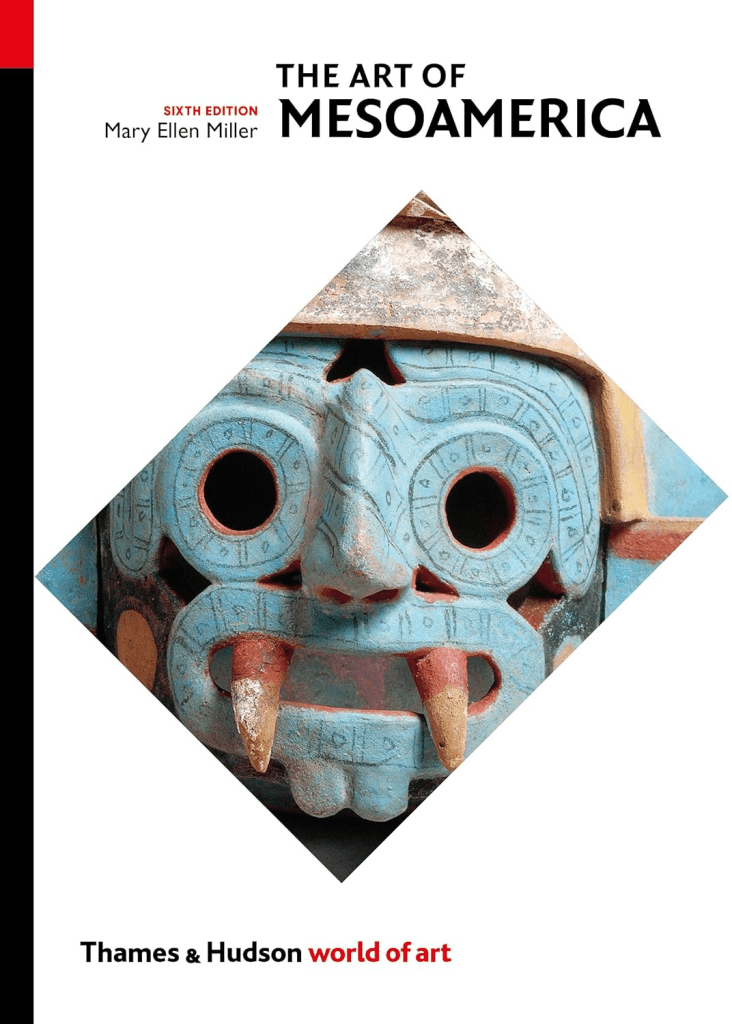
Me criticizing authors with hundreds of times more knowledge on this topic than me aside, the book has provided me with oodles of reference material to work. I wanted the idol to be a depiction of the Aztec god of rain, Tlaloc, given that he is my favorite deity in that pantheon and it was fitting given the flood that was still fresh in my mind.
Sketches I made while working on the Tlaloc Idol Box.
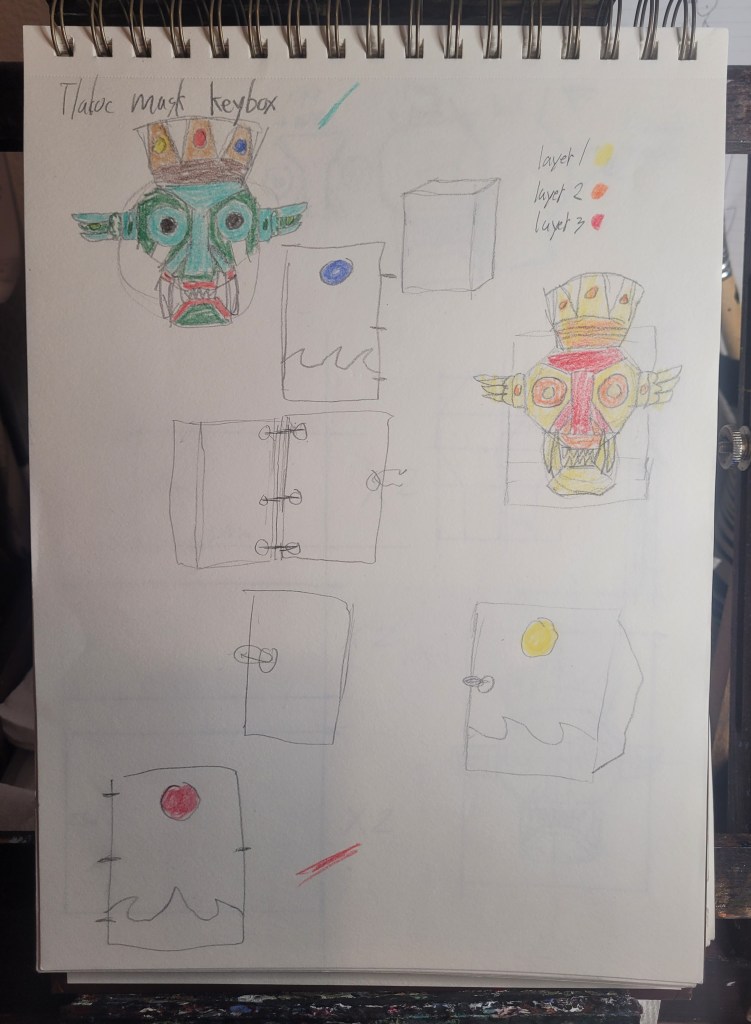
As for the type of idol it would be, I had the idea to make it a box which I could wear around my neck that would hold my car keys inside it so I wouldn’t lose them. I really liked this idea, but the box ended up being too big for me to wear it without it looking weird. Additionally, whenever I walked with the box on, it would always bounce on my chest and get turned around.
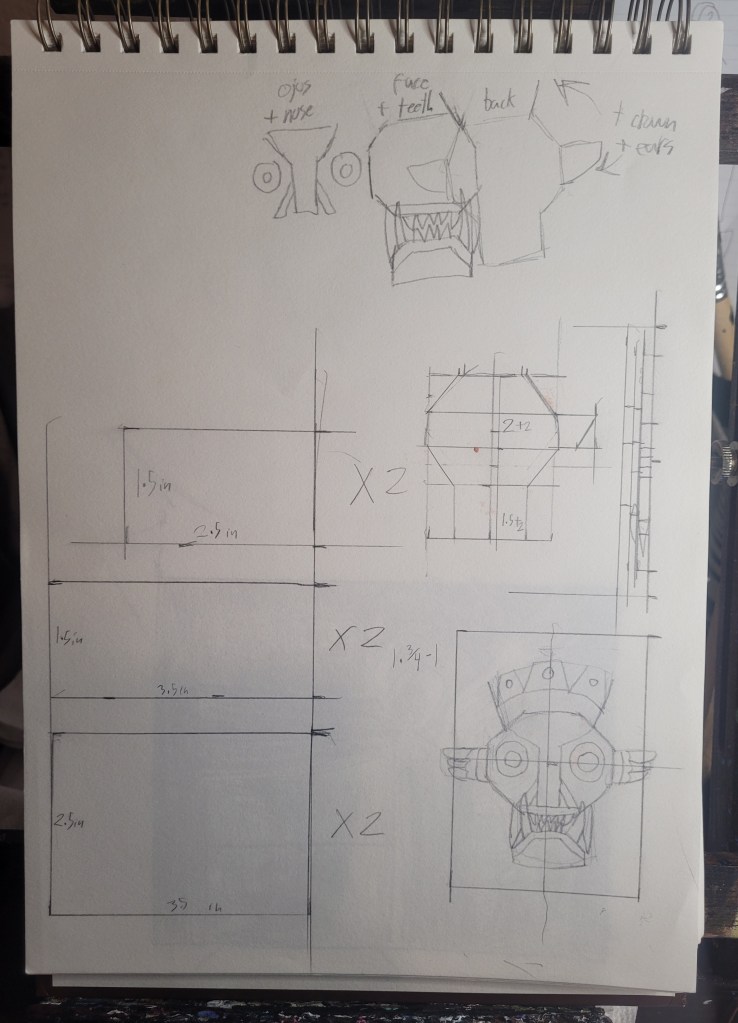
Despite that, the rest of the creative process for this piece went fairly well. I used cardboard to make the box itself and clay to make the head, as they were materials I was comfortable using. I didn’t stray too far from most depictions of the deity, with the main liberty I took being the motif of the three suns I added. You see, in most versions of the Aztec creation myth, Tlaloc was the 3rd sun of the 3rd world before he destroyed it by drowning it in a rain of fire after his wife cheated on him with Tezcatlipoca. I figured I could imbue the piece with a bit of my own iconography by adding 3 suns bearing the 3 primary colors, which I’ve associated myself with quite a bit in my work.
Sketches I made while working on the Tlaloc Idol Box.
This is how the idol turned out:
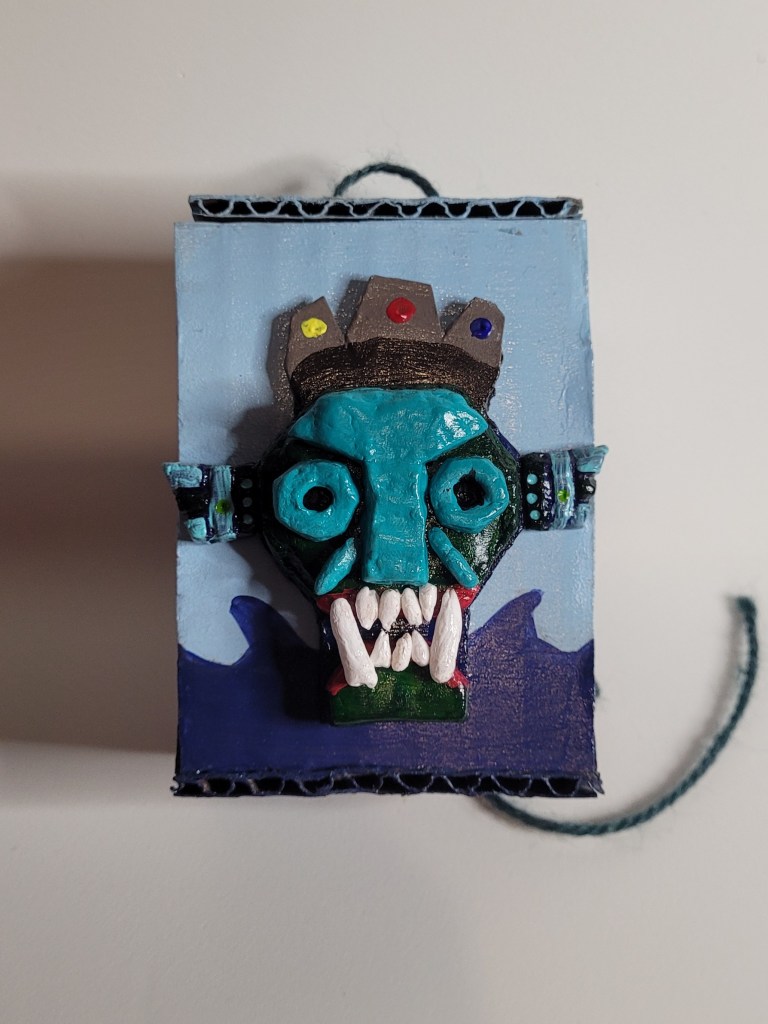
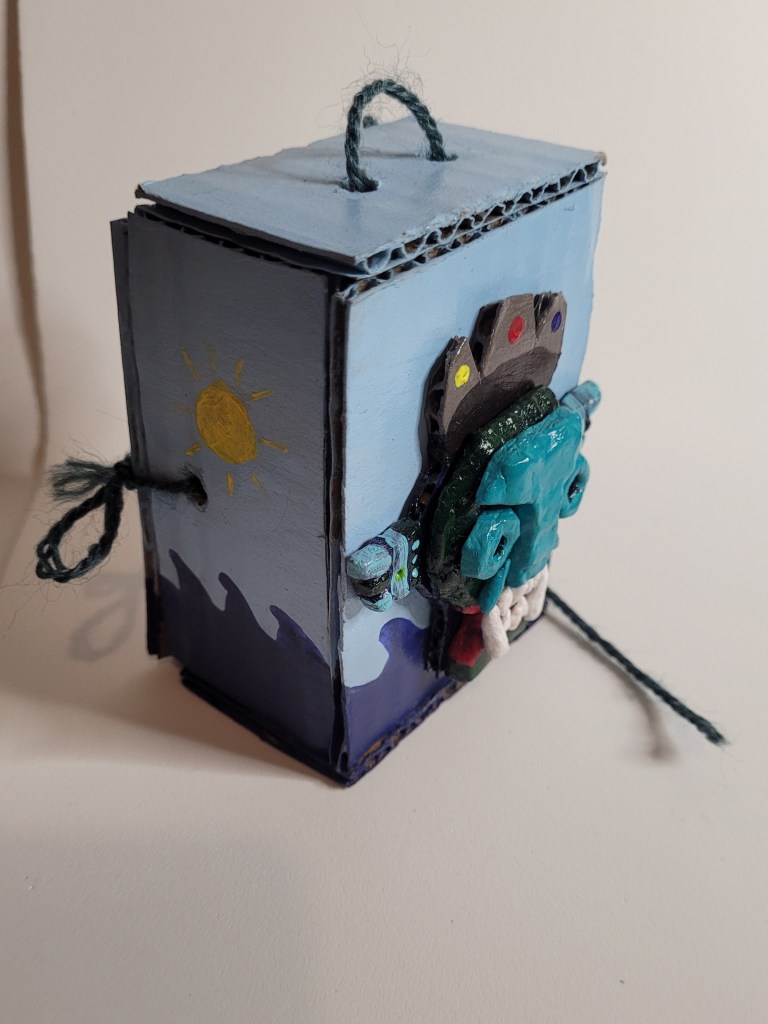
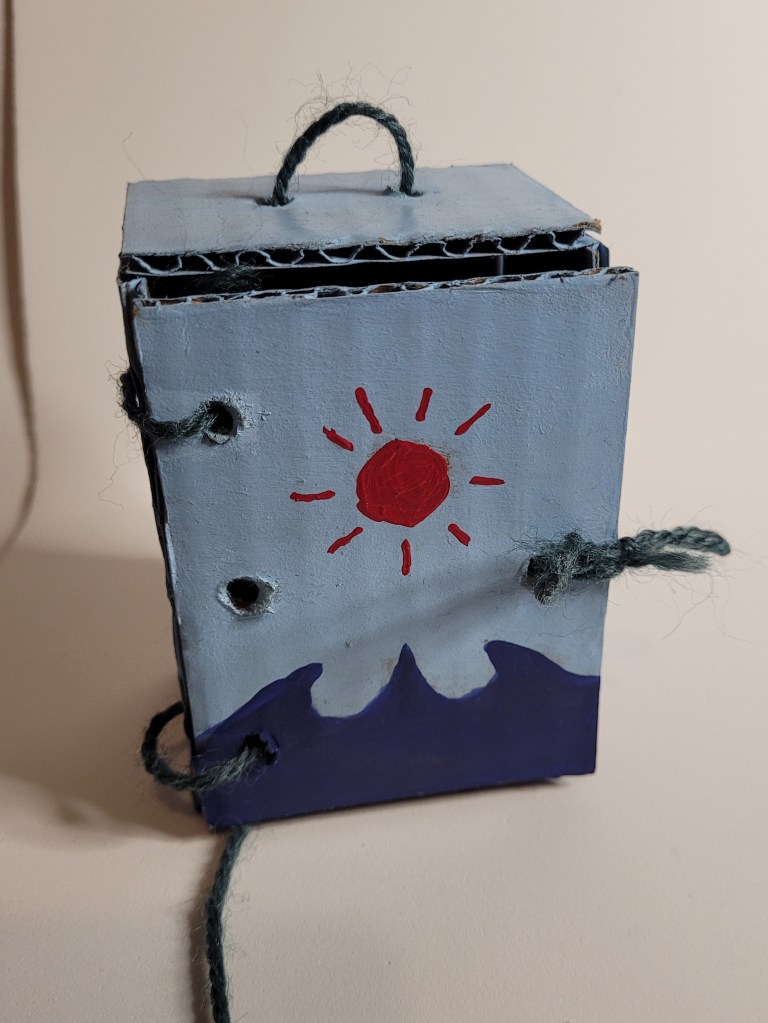
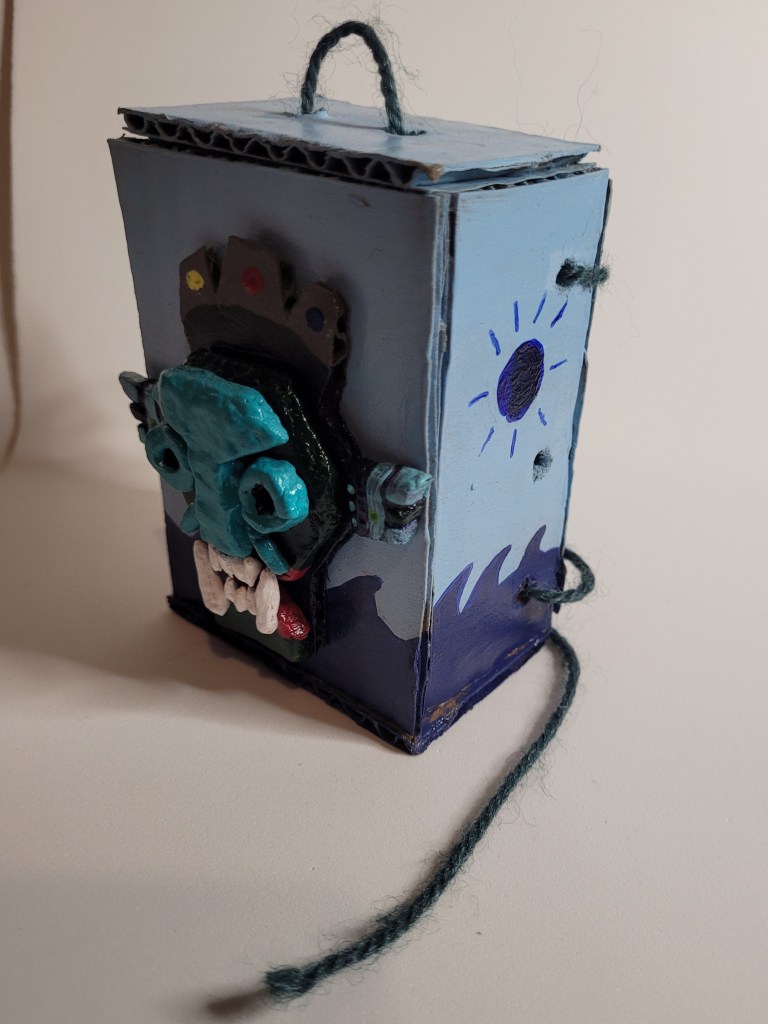
You know, originally I had the suns on his crown be little balls of clay painted and glued onto the sculpture, but they kept breaking off so I just decided to paint the suns onto the crown. It’s a shame that the original idea I had for this piece as a key box didn’t really work out, but I suppose complications are to be expected in the creative process. And the final product turned out fairly nice as well, which is neat.
Anyways, thanks for reading this blog post.
From,
Kekoa Paki
 Kekoa Paki Arts
Leave a comment